How to Store Summer Vehicles Until Next Year: A Guide from YourWay Storage – McKinley
As the colder months approach, it’s time to start thinking about winterizing your summer vehicles like boats, jet skis, and ATVs. Proper storage ensures they’re ready to go when summer returns, prevents weather damage, and extends their lifespan. Here’s a step-by-step guide on the best practices to prepare and store your summer vehicles during the winter months.
1. Cleaning and Detailing Your Vehicle
Before storing your vehicles, it’s essential to clean and detail them to prevent dirt, salt, and debris from causing corrosion and rust over time. Here’s a quick checklist:
Boat: Wash off saltwater and remove any algae or barnacles. Use a mild soap and water mixture to clean the hull, deck, and upholstery.
Jet Ski: Thoroughly rinse off salt and sand, then dry all parts to prevent water spots and corrosion.
ATV: Remove any mud, dirt, and grime, focusing on the undercarriage and wheels.
Once cleaned, allow each vehicle to air dry completely before moving on to the next steps.
2. Protect the Battery
Battery maintenance is crucial when storing summer vehicles. Batteries lose charge over time, and if left unattended, they can be damaged by the cold.
Disconnect the Battery: Remove the battery and store it in a cool, dry place. Avoid storing batteries on concrete as it may cause them to discharge faster.
Use a Trickle Charger: Connect a trickle charger to keep the battery at optimal charge levels. This prevents the battery from dying and losing capacity over winter.
3. Fuel System Maintenance
If fuel is left in your vehicles for an extended period, it can degrade, leading to clogged lines and carburetors.
Add a Fuel Stabilizer: A fuel stabilizer keeps gas fresh for months, ensuring your vehicle starts up smoothly next season.
Run the Engine Briefly: After adding the stabilizer, run the engine for a few minutes to allow the stabilized fuel to circulate through the entire fuel system.
For boats, it’s also essential to fill up the tank to prevent condensation, which can lead to rust.
4. Prevent Moisture and Weather Damage
Moisture can be a major threat, especially for boats and jet skis. Here’s how to protect your vehicles:
Use a Quality Cover: Invest in a high-quality, waterproof cover designed for your specific vehicle type. Ensure it’s breathable to prevent mold and mildew buildup.
Elevate and Drain: For boats and jet skis, remove any drain plugs and elevate the bow to allow any remaining water to drain out.
Seal Openings: Cover or tape off any openings or exhaust pipes to prevent rodents or pests from entering.
5. Tire Care
Long periods of inactivity can lead to flat spots on ATV and trailer tires.
Inflate Tires to the Proper PSI: Check and inflate the tires to the recommended pressure.
Elevate the Vehicle (if possible): If you have the option, elevate your ATV or trailer to reduce the weight on the tires. This minimizes the risk of flat spots.
6. Store in a Climate-Controlled Unit
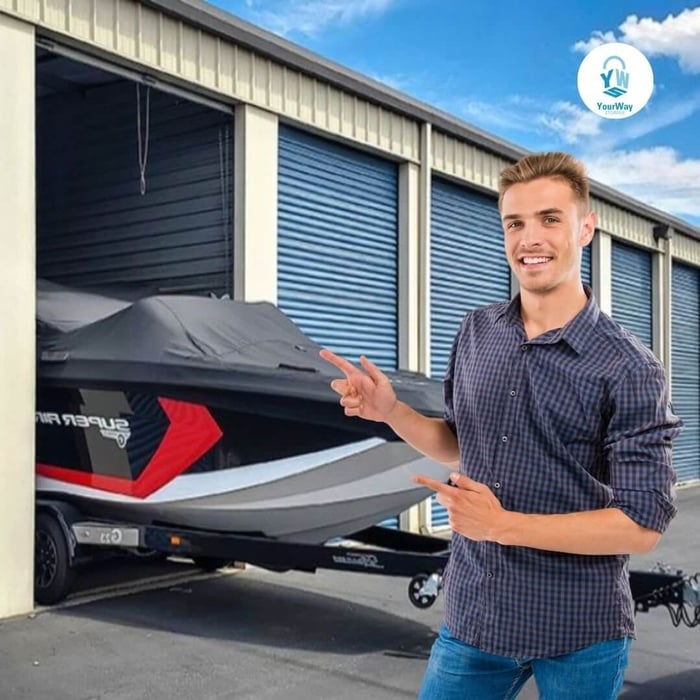
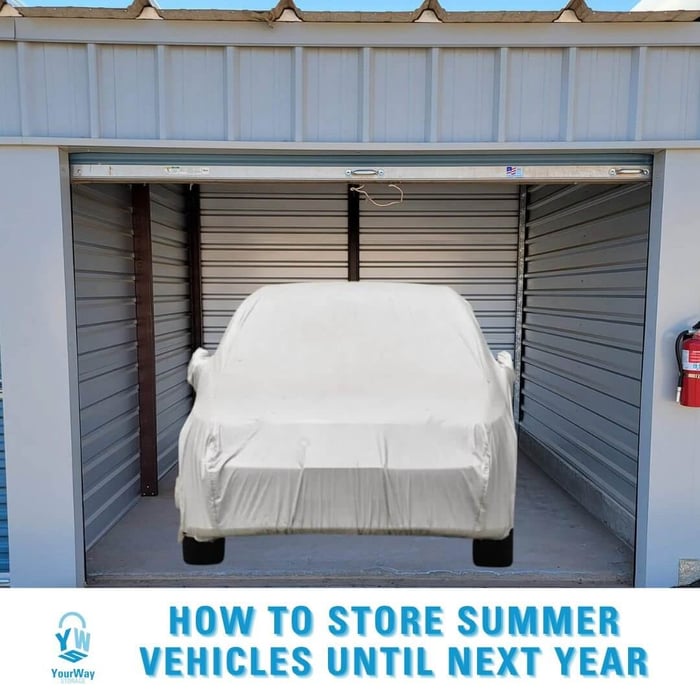
For optimal protection, especially during freezing temperatures, consider a climate-controlled storage unit. These units regulate temperature and humidity, protecting against extreme cold, moisture, and pests. YourWay Storage – McKinley offers a range of storage solutions tailored for vehicle storage, keeping your summer investments safe and sound until you’re ready to hit the trails and waves again.
7. Final Checks Before Storage
Before closing the storage unit, do a final check on each vehicle:
Ensure all parts are secured, covered, and stored properly.
Double-check fuel levels, battery connections, and tire pressure.
Lock and cover each vehicle to prevent dust accumulation and unauthorized access.
Conclusion
Storing your summer vehicles doesn’t have to be complicated, but taking these steps will help ensure they’re ready for next season. YourWay Storage – McKinley is here to support your storage needs with our secure and convenient options. Reach out to learn more about our vehicle storage solutions, so you can store with confidence and enjoy peace of mind all winter long!